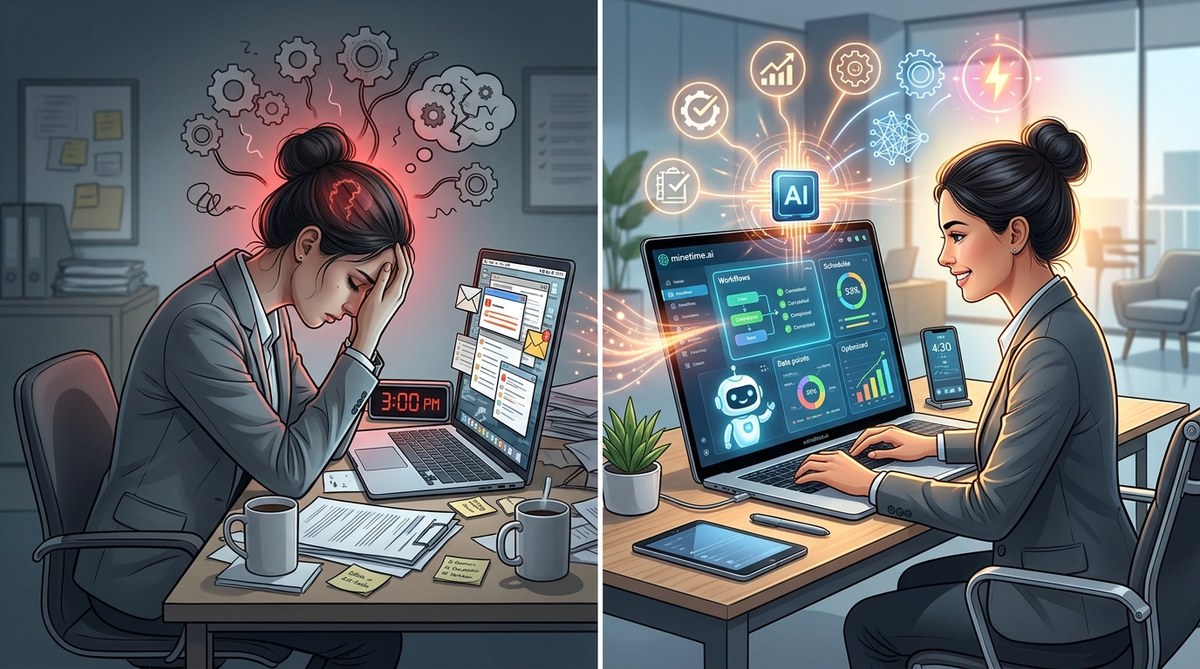
You sit down after lunch, ready to tackle the second half of your day. Your coffee cup is half empty. Your to-do list is still long. Then it hits you. Your eyes get heavy. Your thoughts turn to sludge. The cursor blinks on a blank document while you stare through the window. This is the afternoon slump, and it is not a character flaw. It is biology. Your body’s natural circadian rhythm dips energy between 2 PM and 4 PM. But here is the good news: you can work with your biology instead of fighting it. And in 2026, AI tools make that easier than ever.
The afternoon slump is a biological reality driven by your circadian rhythm, not laziness. You can beat it by aligning your work with your energy patterns. AI tools help by scheduling tasks during peak focus, automating low-energy chores, and reminding you to take strategic breaks. Small changes to your routine can reclaim two hours of productive afternoon time.
What Actually Causes Your Afternoon Energy Crash
Your brain does not run out of fuel randomly. The slump follows a predictable pattern rooted in your internal body clock, or circadian rhythm. Around 2 PM, your body experiences a natural dip in core temperature and a rise in a neurotransmitter called adenosine. Adenosine builds up throughout the morning as your brain uses energy. It signals tiredness. That is the same chemical that caffeine blocks to keep you alert.
Your lunch also plays a role. A meal high in refined carbs causes a spike in blood sugar, followed by a crash. That crash lines up perfectly with your natural afternoon dip. The result is a double hit: your biology says rest, and your blood sugar says sleep.
Stress adds another layer. Morning cortisol is high, which keeps you sharp. By afternoon, cortisol levels drop. If you spent the morning in back-to-back meetings or deep focus, your cognitive resources are depleted. Your brain is not broken. It is just out of gas.
How AI Can Reshape Your Afternoon Energy
AI tools are not just for generating text or analyzing spreadsheets. They can actively manage your energy. The idea is simple: use AI to schedule your hardest work when your energy is highest and offload low-focus tasks to your slump period.
Here is a practical process to set this up:
-
Track your energy for one week. Use a simple note or a time tracking app. Every hour, note your energy level from 1 to 5. Most people see a clear pattern: high energy from 9 AM to 11 AM, a dip after lunch, and a second smaller peak around 4 PM.
-
Let AI analyze your calendar. Tools like Minetime AI can scan your existing calendar and identify patterns. They can suggest moving deep work like writing or analysis to your morning peak and scheduling meetings or routine responses to your afternoon low.
-
Automate the low-energy tasks. Use AI to draft emails, summarize meeting notes, or organize your task list during your slump. That way, when energy returns, you are not catching up. You are moving forward.
This approach is called energy mapping. It works better than forcing yourself to be productive at 3 PM. Learn more about energy mapping with AI scheduling tools.
Six Science-Backed Solutions That Work
You do not need a complete life overhaul. Small adjustments create big shifts in afternoon energy. Here are six strategies that research supports and real people use.
1. Rethink Your Lunch
What you eat at noon determines your 3 PM energy. A lunch heavy in white bread, pasta, or sugary drinks spikes blood sugar and then crashes it. Instead, aim for protein, healthy fats, and fiber. A salad with grilled chicken and avocado or a quinoa bowl with beans will keep your blood sugar steady.
2. Change Your Caffeine Timing
That second cup of coffee at 2 PM might be making things worse. Caffeine blocks adenosine, but it also delays your natural sleep pressure. If you drink coffee too late, you will feel a crash later and it may interfere with your night sleep. Try having your last caffeine before noon. If you need a boost in the afternoon, try a short walk or a glass of cold water first.
3. Use Strategic Breaks
Your brain is not designed for eight hours of continuous focus. It works in pulses. The Pomodoro technique, 25 minutes of work followed by a 5 minute break, works well for many people. But you can adapt it. Try 45 minutes of work and a 10 minute break. During the break, step away from your screen. Stretch. Walk around the block. Do not check social media. That keeps your brain in recovery mode.
4. Move Your Body
Sitting still for hours drains energy. A five minute walk can increase blood flow and oxygen to your brain. It also triggers the release of dopamine and norepinephrine, which improve focus. You do not need a gym. Just walk up and down the stairs or step outside for fresh air.
“Movement is the most underrated tool for cognitive performance. A short walk can boost creative thinking by 60 percent for up to two hours.” – Dr. John Ratey, author of Spark
5. Hydrate Earlier Than You Think
Mild dehydration can cause fatigue, headaches, and brain fog. By the time you feel thirsty, you are already dehydrated. Keep a water bottle on your desk and sip throughout the morning. Aim for at least 16 ounces before noon. That small habit prevents the afternoon crash before it starts.
6. Align Tasks With Energy Levels
This is where AI shines. Instead of fighting your biology, schedule around it. Here is a simple table to guide you:
| Time of Day | Energy Level | Best Task Type |
|---|---|---|
| 8 AM – 11 AM | High | Deep work, writing, analysis, strategic planning |
| 11 AM – 1 PM | Moderate | Meetings, collaboration, email responses |
| 1 PM – 3 PM | Low | Routine tasks, data entry, organizing, learning |
| 3 PM – 5 PM | Moderate | Creative work, brainstorming, reviewing |
Use this as a template. Adjust based on your personal energy data. See how AI can predict your peak productivity hours.
Common Mistakes That Make the Slump Worse
Many people try to power through the slump with willpower alone. That rarely works. Here are three mistakes to avoid.
- Skipping breaks to save time. This backfires. Your brain needs rest to recharge. Without breaks, your focus drops faster and you make more errors.
- Eating a heavy lunch. A large meal diverts blood flow to your digestive system, away from your brain. Keep lunch moderate in size.
- Relying on energy drinks. They give a temporary spike followed by a hard crash. The sugar and caffeine combo can disrupt your sleep, making tomorrow’s slump worse.
A Three-Step Afternoon Rescue Plan
If you are already in the middle of a slump, here is a numbered rescue plan to pull yourself out.
-
Step away from your screen for five minutes. Stand up, walk, stretch, or get a glass of water. Do not check your phone. Let your eyes rest on something at least 20 feet away.
-
Do one small physical task. Tidy your desk, file a document, or water a plant. Physical movement resets your brain and gives a sense of accomplishment.
-
Tackle the smallest item on your list. Pick a task that takes less than two minutes. Answer a yes or no email. Approve a request. Cross it off. That small win triggers dopamine and builds momentum.
How to Build an Afternoon Routine That Sticks
A routine is not a rigid schedule. It is a set of habits that run on autopilot. The best routines are simple enough that you can do them even when tired.
Start with one change. Maybe you swap your 2 PM coffee for a 10 minute walk. Do that for two weeks. Then add another change, like a protein-rich lunch. Over time, these small shifts compound. You will notice that your 3 PM brain fog lifts earlier and earlier.
AI tools can help you build and maintain this routine. They can remind you to take a break, suggest when to shift tasks, and even automate the boring parts of your day. Check out these top AI tools for daily productivity in 2026.
Why Your Afternoons Can Be Better Than Your Mornings
Most people assume mornings are the only productive time. That is not true for everyone. Some people have a second energy peak in the late afternoon. If you can protect that window from meetings and distractions, you might find that your best creative work happens at 4 PM instead of 10 AM.
The key is to stop fighting your biology and start working with it. Use data, not willpower. Track your energy. Let AI handle the scheduling. Give yourself permission to rest when your brain needs it.
Your afternoon slump is not a sign that you are lazy or undisciplined. It is a signal. Listen to it. Then build a system that turns that low point into a sustainable part of your day. You will get more done, feel less drained, and actually enjoy your afternoons again.